Need selection quotation, sample testing, voltage customization?
13827229292
You can also use online customer service or Wangwang consultation to obtain detailed information and installation dimension drawings
Vacuum Technology in plastics processing covers mixing, extrusion, extruder calibration, thermoforming, injection moulding and recycling. We offer a range of vacuum generation options for this field.
Advantages of a Vacuum System:
1. Avoiding waste of power: heat, noise and environmental impact affect working conditions and personnel as much as the plant's energy and operating costs.
2. Heat build-up: in a confined space, heat from several independent machines overloads the working environment and puts extra load on air-conditioning equipment.
3. Noise: noise from all the Vacuum Pumps and Air Compressors raises the overall noise level, causing stress and premature fatigue among personnel.
4. Output concerns: peak demand for vacuum and compressed air calls for extra machines, and those machines are economical only when used occasionally. A single machine failure can stop a whole production line.
5. High Maintenance and power costs: servicing a series of individual pumps takes considerable time, and separately operated Compressors and vacuum pumps add to electricity costs.
6. Keeping the workplace tidy, clean and presentable.
7. A stable vacuum supply without waste.
Set the upper and lower limits of the vacuum system first (for example -0.08 MPa upper and -0.06 MPa lower). After the system starts, one vacuum pump runs until the vacuum in the receiver is higher than the upper limit; the pump then stops automatically and the vacuum in the receiver is held by the vacuum check valve. When process demand lowers the vacuum below the lower limit, another pump starts automatically. If a single pump cannot pull the receiver to the lower limit within a set time, the next pump starts as well, until the upper limit is exceeded.
Performance features:
After the first start, the whole operating cycle is fully automatic. During operation the vacuum at every point of the system stays within the permitted band, and that band can be adjusted to suit the user's requirements.
The unit controls the system without operator intervention and isolates the vacuum system automatically on power failure. The control cabinet also protects the pump motors against overload and short circuit and provides operating records for each pump.
Central vacuum system in detail:
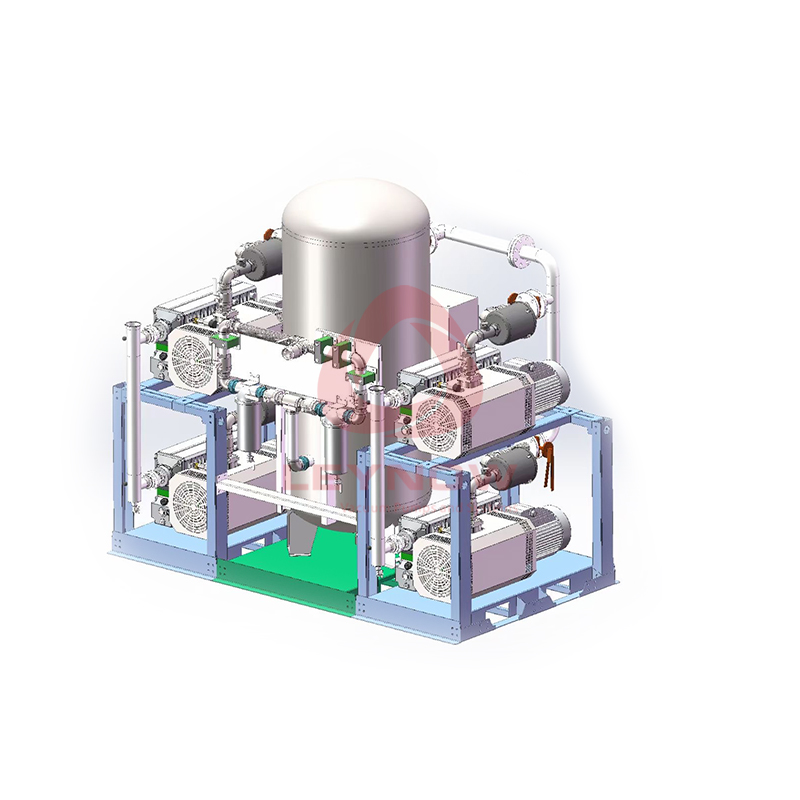
With a central vacuum system design, many single pumps on individual production machines are replaced by a few larger vacuum pumps. An automatic variable-frequency control system connects the pumps to the production machines through the receiver and main and branch piping. Vacuum is supplied fully automatically according to production demand, which saves energy and considerably reduces noise levels in staff working areas.
Central vacuum system composition:
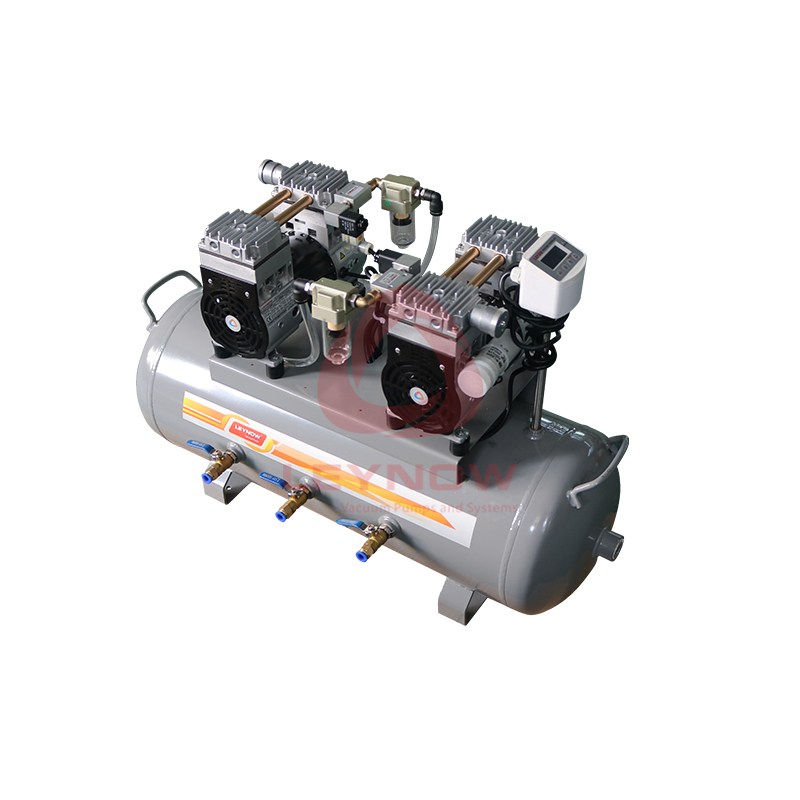
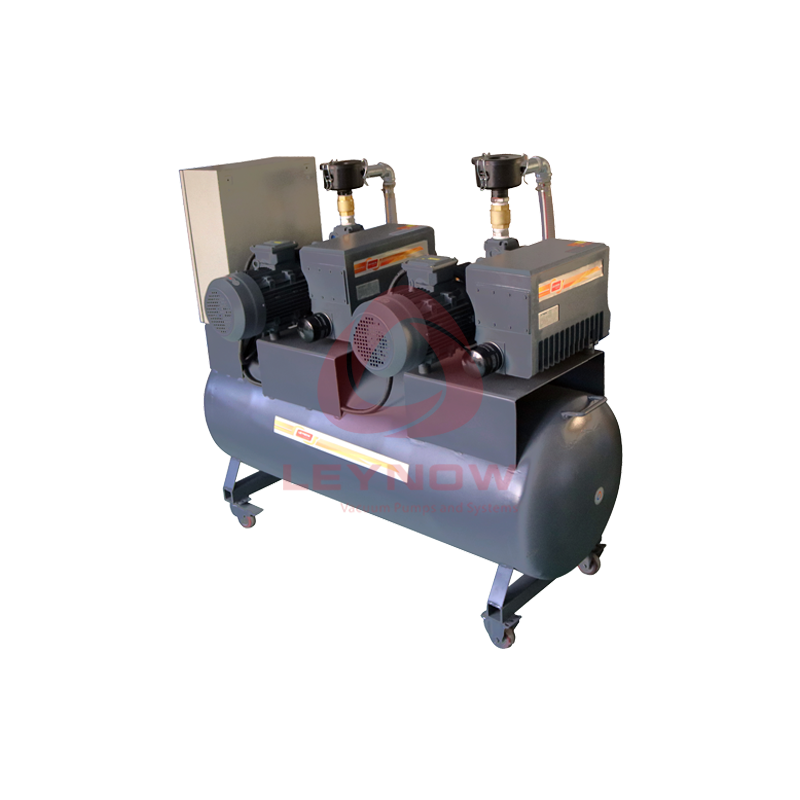
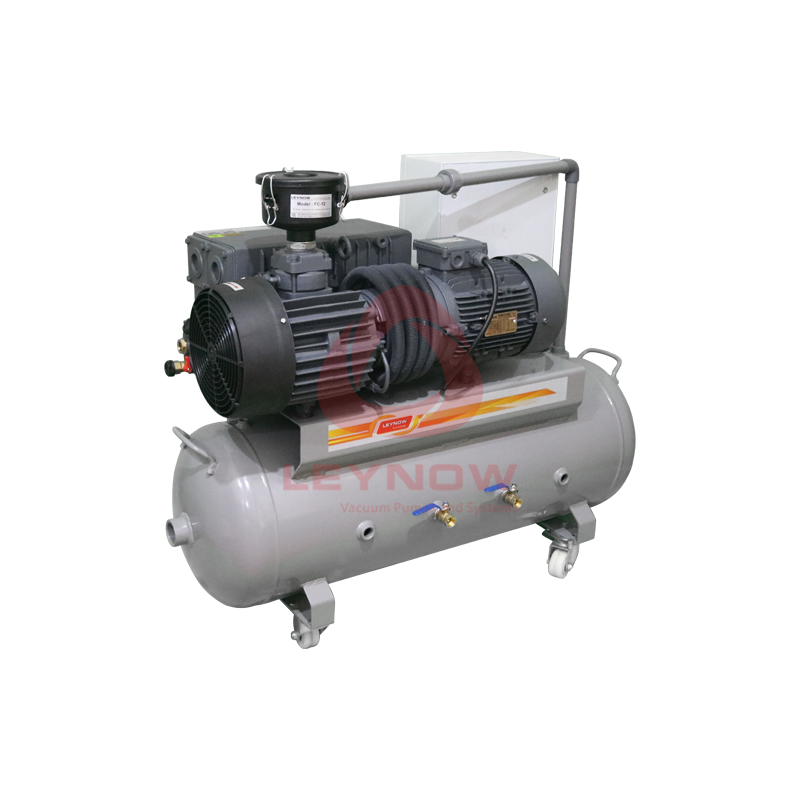
Vacuum pump + control system + air receiver + piping Installation
Advantages of a central vacuum system:
1. No heat or noise emission in the production area
Production facilities face increasingly strict rules on noise and heat. With a centralized pneumatic system, separate vacuum pumps and compressors are no longer needed on the shop floor, so employees are exposed to minimal heat, noise and oil mist.
2. Lower energy demand
Removing many decentralized pumps reduces heat noticeably, so air-conditioning carries a lower load and uses less energy. Discharging exhaust (and the associated oil mist) outside the production area greatly improves air quality there. The central system is regulated by a PLC that monitors and controls the different pressure or Vacuum Levels.
3. Centralized intelligent control
With a central vacuum system you can monitor any running pump remotely, which is far simpler than checking and servicing pumps individually and reduces inspection manpower.
4. Lower maintenance requirements
Plants without a centralized air supply usually run several vacuum pumps and compressors from several manufacturers. Many different replacement and wear parts are needed for each separate system, which adds considerable logistics and makes repairs expensive. In a centralized pneumatic system, vacuum pumps and compressors are low-maintenance and share many common parts and materials, which limits the range of spare parts needed to a minimum.
Fill in the following information, and we will quickly send the HP-0200V official quotation and technical documents to your email. Engineers can provide one-on-one selection support.
As AI training and high-performance computing enter the ultra-high-density era, immersion liquid cooling with ultra-low PUE relies on reliable vacuum systems - ...
Rack power in AI model training and HPC clusters keeps climbing past 100kW. Leynow vacuum pumps provide the vacuum backbone for immersion liquid cooling systems...
Sterilisation is the core safeguard for product safety and patient health in medical, pharmaceutical and laboratory settings. Leynow vacuum pumps deliver precis...
With technology advancing, automatic dispensing machines have transformed tablet housing packaging. Leynow vacuum pumps help raise consistency and production qu...
Scan WeChat QR Code · Add Exclusive Consultant

Email: Service@LeyNow.com
WeChat Online ConsultationYou can also call 13827229292 directly for consultation