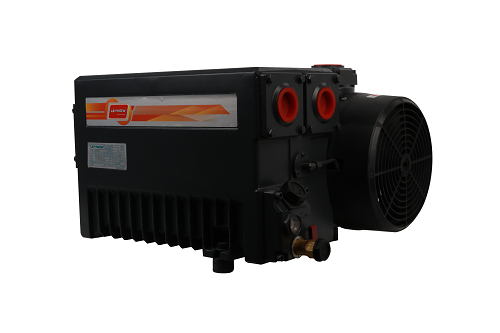
A Vacuum Pump is equipment widely used in manufacturing, chemical, electronics, medical, and aerospace fields. It extracts gas from a closed container to achieve a certain Vacuum Level. Based on different working principles and application scenarios, Vacuum pumps can be divided into multiple types. This article introduces the types, uses, and selection methods of vacuum pumps.

I. Types of Vacuum Pumps
1. Mechanical Pump
The mechanical pump is a common type that forms a vacuum by compressing and discharging gas through mechanical motion. It is suitable for pumping in the medium-to-low vacuum range, typically used in processes such as Vacuum Drying and Vacuum Packaging.
2. Diffusion Pump
A diffusion pump is a high-vacuum pump that creates vacuum by diffusing gas molecules outward. It is suitable for pumping in the high-vacuum range, typically used in Semiconductors, optics, and aerospace.
3. Molecular Pump
A molecular pump is an ultra-high vacuum pump that expels gas molecules from a container through molecular collision and rebound, achieving extremely high vacuum. It is suitable for pumping in the ultra-high vacuum range, typically used in scientific research and semiconductor manufacturing.
4. Roots Pump
A roots pump is a positive-displacement vacuum pump that compresses and discharges gas via rotating rotors, forming a vacuum. It is suitable for pumping in the medium-vacuum range, typically used in processes such as vacuum furnaces and vacuum Cooling.
5. Ion Pump
An ion pump is a high-vacuum pump that ionizes gas molecules via an electric field and expels the ions from the container, forming a vacuum. It is suitable for pumping in the high-vacuum range, typically used in semiconductors, optics, and aerospace.
II. Uses of Vacuum Pumps
Vacuum pumps are widely used in manufacturing, chemical, electronics, medical, and aerospace fields. For example:
1. Vacuum drying: Place moist items in a vacuum chamber and use the pump to extract the moisture, achieving drying.
2. Vacuum Packaging: Put food and other items into vacuum bags and use the pump to extract the oxygen, extending shelf life.
3. Vacuum furnace: Place items in a vacuum chamber and use the pump to extract the gas, enabling high-temperature treatment.
4. Semiconductor manufacturing: During production, gas in the equipment must be extracted to ensure process purity.
III. Selection of Vacuum Pumps
When selecting a vacuum pump, multiple factors must be considered, including the required vacuum level, pumping speed, pump material, sealing performance, and noise. Generally, the right pump should be chosen based on a comprehensive assessment of the specific application and requirements. For example, for high-vacuum applications, a diffusion or ion pump can be chosen; for medium-to-low vacuum applications, a mechanical or roots pump is suitable.
In summary, the vacuum pump is a very important industrial device with broad applications across various fields. Choosing the right one improves efficiency, reduces costs, and brings greater returns to enterprises.