80 kW High-Density AI Inference Liquid Cooling Solution Delivered: Cold Plate and Immersion Hybrid with Dongguan Leno Vacuum Systems Achieves Ultra-Low PUE
Introduction
Computing demand for AI inference is exploding, and high-density cabinet cooling has become the core bottleneck in intelligent computing centre construction. For AI inference scenarios, a mainstream high-density solution has been launched combining cold plate liquid cooling, immersion Hybrid Liquid Cooling and a centralised negative pressure CDU, raising single-cabinet capacity to 80 kW with annual PUE as low as 1.12. The whole solution is domestically deployed, relying on customised Vacuum Pump systems from Dongguan Leno Electromechanical to deliver the three functions of negative pressure circulation, medium degassing and pipe leak testing, balancing high-density cooling, operational safety, energy savings and cost advantages, and providing a standardised implementation path for the large-scale construction of AI inference computing parks.
1. High-density AI computing drives a new hybrid liquid cooling solution, with 80 kW cabinets suiting the full range of inference duties
AI large-model inference, real-time video computing and edge intelligent computing clusters are pushing computing density ever higher, and conventional cabinets within 30 kW can no longer carry stacked multi-GPU high-density servers. Air cooling has insufficient headroom, single cold plate cooling is limited, and full immersion liquid cooling carries high retrofit cost and complex Maintenance. Cold plate plus immersion hybrid liquid cooling has become the preferred high-density construction solution for AI inference rooms, using a centralised negative pressure CDU in a multi-cabinet parallel mode where one central CDU manages several 80 kW cabinets, with centralised piping that reduces equipment clutter in the room and simplifies unified operation and maintenance.
The standardised solution stably carries an 80 kW computing load per cabinet with annual comprehensive PUE controlled at 1.12, far below the national PUE control red line for data centres. Cold plates attach to GPU and CPU core heat sources for precise heat conduction, while secondary heat-generating hardware is cooled by immersion in liquid, the two modes complementing each other to maximise cooling headroom and support 7x24 continuous AI inference computing. The complete domestic hardware budget is 250,000 to 350,000 yuan per cabinet, covering the CDU, hot and cold piping, cooling hardware, Vacuum system and Commissioning, more than 30 percent lower than imported liquid cooling equipment, suitable for batch deployment in new AI intelligent computing parks.
The whole system relies on negative pressure operation to avoid leakage risk: piping runs entirely under negative pressure, so if a pipe is damaged air seeps inward and coolant does not spill out, eliminating server short circuits and downtime. The negative pressure system stably maintains a working vacuum of -0.09 to -0.098 MPa, ensuring stable coolant circulation while reducing air dissolved in the coolant, avoiding pipe oxidation and scaling and extending the life of liquid cooling hardware. The centralised architecture supports unified control of multiple cabinets, with tidy room piping layout and flexible expansion, since new cabinets can later be connected directly to the existing CDU piping, matching phased computing expansion needs.
2. Leno vacuum pump systems form the core of the negative pressure system, with a three-pump architecture ensuring full-process reliability
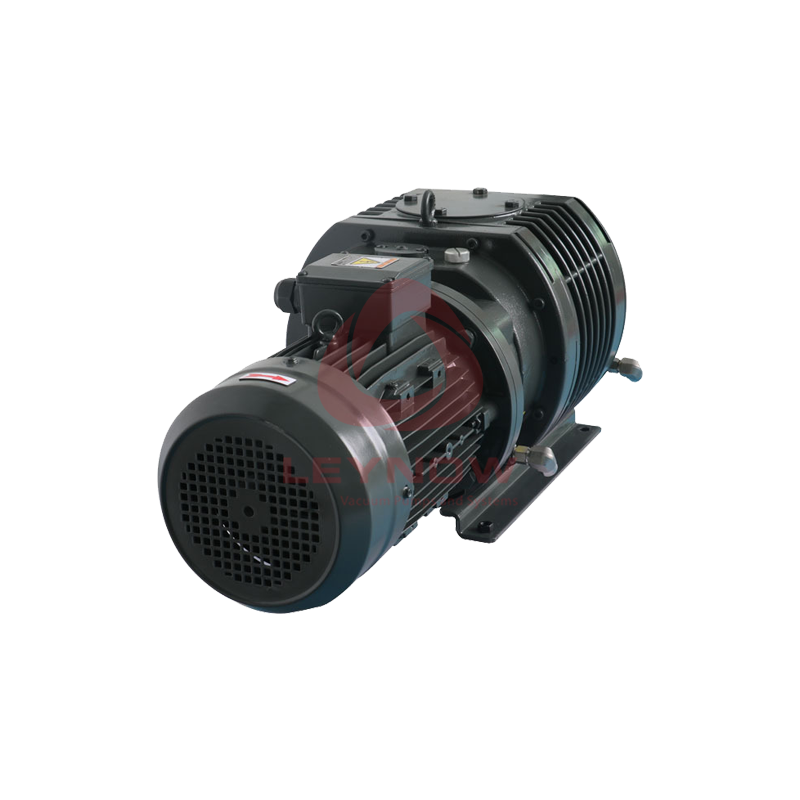
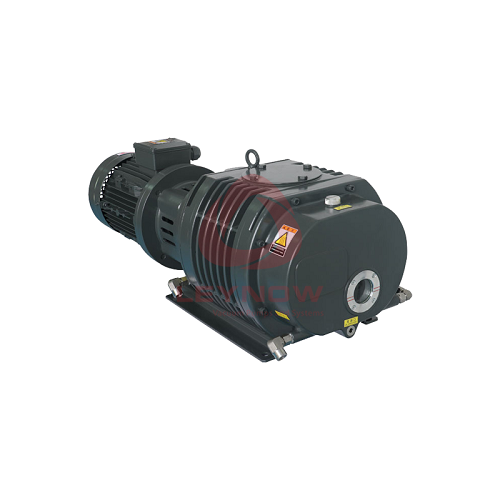
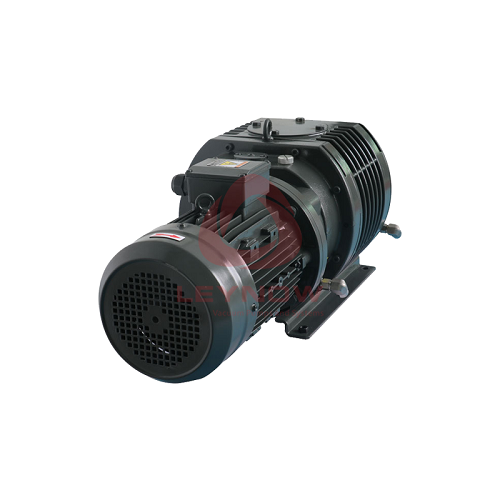
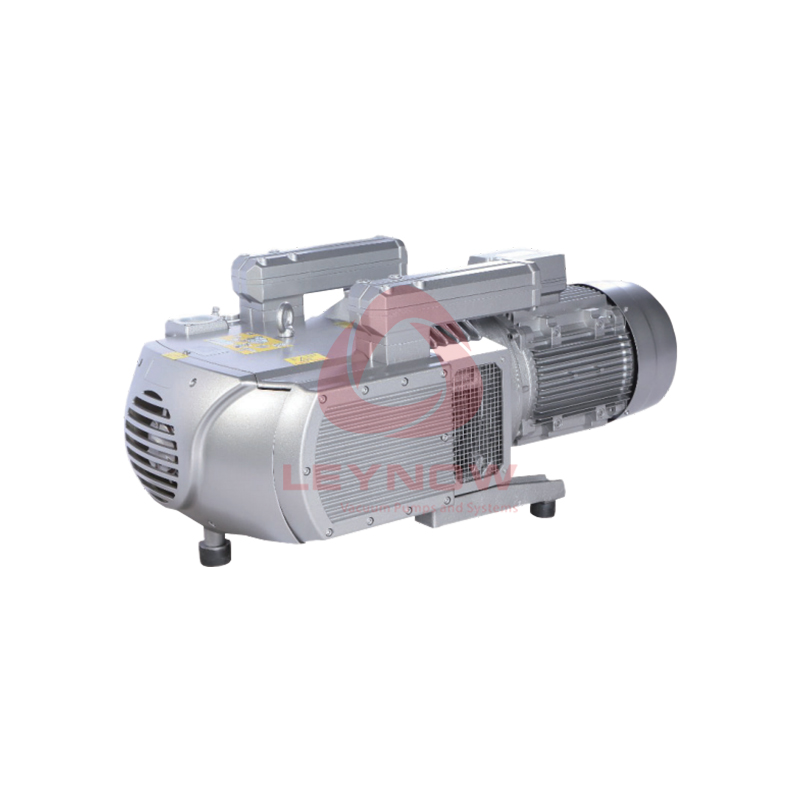
Whether a negative pressure CDU runs stably over the long term depends on the vacuum pump system as core hardware. This 80 kW hybrid liquid cooling solution uses self-developed vacuum equipment from Dongguan Leno Electromechanical across the line: a customised Roots pump plus dry rotary vane pump vacuum system together with a small dry rotary vane degassing pump, forming a mature configuration of one duty, one standby plus one degassing pump, three pumps in total, meeting the multiple needs of negative pressure stabilisation, immersion medium degassing and pipe nitrogen leak testing in one package.
The main circulation system uses a Leno Roots pump with a dry rotary vane Backing Pump: the Roots pump has a pumping speed of 150 to 200 m3/h with a 5.5 kW motor, and the backing dry rotary vane pump has 40 to 60 m3/h with a 3 kW motor. The two pumps work together for high-flow rapid evacuation, stably locking the high-precision negative pressure range of -0.09 to -0.098 MPa. All Leno vacuum pumps favour dry oil-free construction, so no lubricating oil mixes into the coolant and no piping clogging or cold plate contamination occurs, meeting liquid cooling cleanliness requirements. The equipment holds ISO9001 and CE Certifications and suits uninterrupted year-round operation in computing rooms. The complete main pump system is priced domestically at 25,000 to 40,000 yuan, offering outstanding value.
The system additionally includes one Leno small dry rotary vane degassing and replenishment pump with a pumping speed of 10 to 20 m3/h at 3,000 to 5,000 yuan each. This pump is dedicated to degassing the immersion coolant, removing dissolved air to prevent air locks and falling heat exchange efficiency; it also handles pipe leak testing and nitrogen pressure holding during maintenance, regularly checking for tiny leaks and controlling risks in advance.
The configuration uses a duty-plus-standby redundant design: under normal conditions the Leno main system carries all negative pressure circulation work; pressure sensors monitor pipe vacuum in real time, and if the duty pump fails the standby pump starts instantly and takes over, with no shutdown and no loss of cooling. Working alongside the independent degassing pump, each unit has its own role, avoiding vacuum pump overload while delivering both fault redundancy and easy maintenance. As a high-tech enterprise based in Dongguan, Leno has a complete production line and nationwide service network, enabling fast supply and on-site commissioning for liquid cooling projects with efficient local maintenance response, solving the after-sales challenges of large computing parks.
3. The solution's overall value stands out, suiting large-scale AI inference construction
First, a leap in computing density. An 80 kW single cabinet far exceeds conventional liquid cooling limits, perfectly accommodating multi-GPU intensive inference servers; the cold plate plus immersion hybrid cooling combines precise temperature control with wide-area heat dissipation, so servers do not overheat and reduce frequency, keeping AI inference response times stable.
Second, significant energy efficiency, with PUE as low as 1.12 sharply compressing cooling electricity costs. Centralised CDU heat exchange together with energy-optimised Leno high-efficiency vacuum pump systems greatly reduces cooling power, meeting dual-carbon policy and clearly lowering long-term operating electricity costs.
Third, complete safety redundancy. Negative pressure physical protection, dual main pump backup and routine Leno vacuum pump leak testing provide multiple layers of protection against leakage, air locks and equipment downtime, suited to high-reliability businesses such as financial AI and intelligent security inference.
Fourth, a self-controlled domestic supply chain. Both liquid cooling hardware and vacuum equipment are domestically produced, with Leno vacuum pumps procured and delivered locally, free of import lead time fluctuations, with interchangeable spare parts and controllable batch construction costs.
Conclusion
As AI inference computing moves towards ultra-high density, the cold plate plus immersion hybrid with centralised negative pressure CDU solution has become the industry preference with 80 kW cooling capacity and ultra-low PUE of 1.12. Dongguan Leno's customised Roots and rotary vane vacuum systems lay a solid foundation for the negative pressure system, balancing safety, energy efficiency and cost with mature domestic vacuum hardware. As AI computing centres accelerate construction across the country, this standardised solution will continue to spread, and with local vacuum support capability it will help China's AI inference computing infrastructure achieve high-quality, cost-effective large-scale deployment.