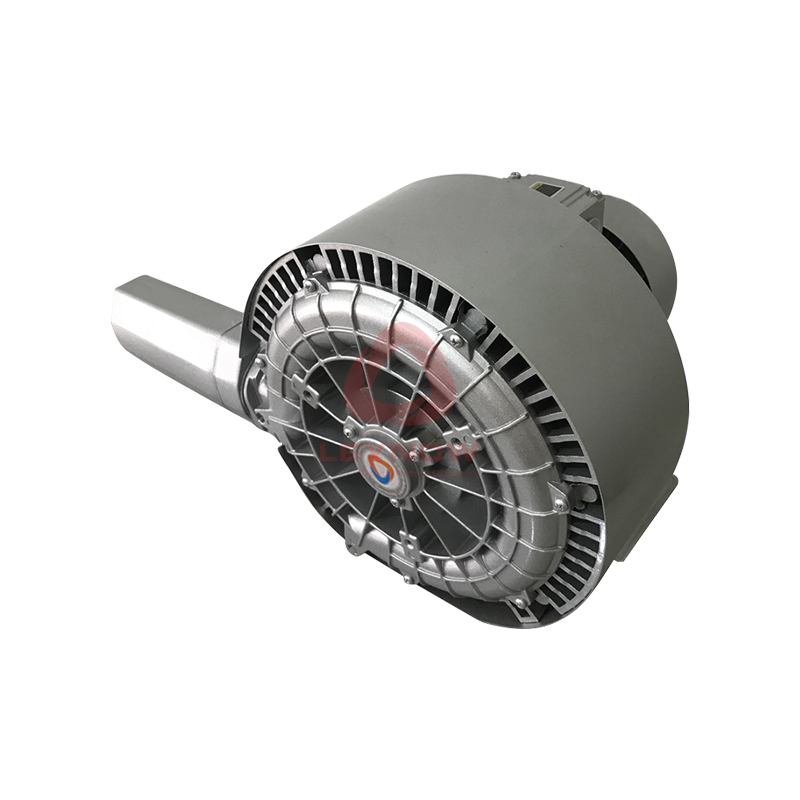
In-Depth Applications of Low-Noise Blowers in the Intelligent Robotics Industry
As industrial technology develops and innovates at an astonishing pace, the intelligent robotics industry is undergoing unprecedented change and expansion. In this field full of innovative energy, Low-Noise Blowers are like a bright new star, quietly penetrating and taking root in every niche application, becoming a key element driving improved robot performance and expanded functions and winning wide user trust. Let us explore the diverse applications of low-noise blowers in the intelligent robotics industry.
Cleaning robots: the driving force behind efficient cleaning
As capable assistants in modern household and commercial cleaning, cleaning robots depend on low-noise blowers for their core functions. In the suction stage the blower plays a vital role, efficiently providing stable and powerful negative pressure for the Vacuum. Take the common robot vacuum: as it moves across the floor, the blower runs at high speed to generate strong suction, quickly drawing dust, hair and fine debris into the dust bin.

Leno High-Pressure Blowers deserve special mention for their outstanding performance in cleaning robot suction. They use advanced impeller designs and precision manufacturing to deliver extremely high air pressure while running quietly, ensuring powerful suction. Even on hard-to-clean surfaces such as carpets, cleaning robots fitted with Leno high-pressure blowers handle the job easily, removing dust lodged deep in the fibres.
Besides suction, low-noise blowers also provide excellent blowing. In some high-end cleaning robots, the strong air stream from the blower effectively blows stubborn dust off floors or equipment surfaces. This blowing function not only improves cleaning efficiency but also ensures thoroughness, preventing dust from remaining in corners and crevices.
Industrial robots: key to stable operation
In the complex environment of Industrial Production, industrial robots perform heavy and precision tasks. Low-noise blowers play two key roles in their operation: Cooling and pneumatic drive.
Robot motors and controllers generate substantial heat during long, intensive work, and without timely effective cooling the equipment's performance and life suffer seriously. Low-noise blowers are widely used in industrial robot cooling systems, continuously supplying cold air to carry away heat from motors and controllers and keep them within the proper operating temperature range. In Automotive plants, for example, robots used for welding and assembly have motors and controllers that run extremely hot, and cooling systems built around low-noise blowers act like an efficient air conditioner for the robot, safeguarding stable operation. Leno high-pressure blowers offer clear advantages in industrial robot cooling. Their unique cooling duct design distributes cold air evenly around heat-generating components for efficient heat dissipation. At the same time, they run extremely quietly, adding no noise pollution to the industrial environment, which matters particularly in noise-sensitive workshops.
In pneumatic systems, low-noise blowers provide stable compressed air for pneumatic actuators, driving robot arms or grippers through precise motions. In electronics manufacturing, industrial robots must pick and place tiny components accurately, requiring pneumatic actuators with extremely fast response and stability. The stable compressed air from low-noise blowers ensures arms and grippers move quickly and accurately, greatly improving production efficiency and product quality. With their high pressure and high flow output, Leno high-pressure blowers provide ample power for pneumatic systems, meeting industrial robot requirements in complex duties.
Service robots: core components that improve user experience
Service robots are increasingly used in modern life, from hotel reception and restaurant delivery to home companionship and care and public area security patrols, gradually changing the way people live. In these service scenarios, low-noise blowers again play an indispensable role.
In air purification robots, the low-noise blower is the core power source driving air circulation and purification. When the robot starts, the blower runs quickly and draws surrounding air continuously into the machine. As air passes through multiple high-efficiency filter stages, dust, pollen, bacteria and harmful gases are effectively filtered and adsorbed, and purified air is released back into the environment through the outlet. Leno high-pressure blowers in air purification robots enable high-volume air circulation for wider coverage and higher efficiency. Their quiet operation means the robot works silently in quiet indoor environments without disturbing normal life and rest.
Besides air purification, the air supply function of service robots also relies on low-noise blowers. In robots with temperature regulation, the blower can deliver conditioned air evenly to a designated area according to the set temperature and fan speed, creating a comfortable environment. In lobby service robots at high-end hotels, for example, it can deliver a gentle breeze at a suitable temperature according to guest needs, improving comfort. Leno high-pressure blowers precisely control air volume and fan speed, meeting diverse air supply requirements in different scenarios.
Agricultural robots: invisible helpers for agricultural modernisation
Agriculture is moving steadily towards modernisation and intelligence, and agricultural robots play an increasingly important role in improving efficiency and reducing labour intensity. Low-noise blowers are widely used in several key stages of agricultural robotics.
In crop protection robots, low-noise blowers are key to uniform spraying of pesticides or fertilisers. As the robot works in the field, the strong air stream from the blower disperses the pesticide or fertiliser and covers crops evenly. This air-assisted spraying method not only improves utilisation and reduces waste but also ensures every part of the crop receives adequate protection and nourishment. Leno high-pressure blowers in crop protection robots generate stable and powerful air streams, making spraying more even and precise and effectively improving quality. Their quiet operation also avoids disturbing the field ecosystem and surrounding wildlife.
In harvesting assistance, low-noise blowers also play an important role. Before harvest, the air stream can blow dust, debris and pesticide residue off crop surfaces, ensuring harvested produce is cleaner and more hygienic. This matters especially for produce eaten directly, such as fruit and vegetables. The powerful blowing capability of Leno high-pressure blowers clears crop surfaces quickly and effectively, facilitating subsequent harvesting and processing.
Medical robots: precision partners safeguarding health
In healthcare, medical robots bring greater precision and efficiency to diagnosis and treatment. Low-noise blowers in medical robots mainly serve two key functions: air circulation and vacuum suction.
In operating theatres and wards, keeping air fresh and clean is vital to patient recovery. Low-noise blowers in medical robots continuously circulate, filter and purify room air, effectively reducing the concentration of bacteria and viruses and creating a safe, healthy treatment environment. In some high-end operating theatre disinfection robots, low-noise blowers quickly and evenly distribute disinfected air throughout the theatre, ensuring air quality meets strict hygiene standards across the surgical area. Leno high-pressure blowers in medical robot air circulation systems provide reliable assurance for medical air purification through efficient air delivery and excellent Filtration performance. Their extremely low noise causes no interference with medical procedures or patient rest.
Vacuum suction is a common and important function in Medical Equipment. In surgery, body fluids and waste must be cleared promptly from the wound to keep the field of view clear and the procedure on track. Low-noise blowers provide stable vacuum suction in these devices, ensuring fluids and waste are removed quickly and effectively. Leno high-pressure blowers generate strong, stable negative pressure meeting the strict requirements of medical equipment in different surgical scenarios. Their precise negative pressure control ensures that tissue is not damaged while fluids and waste are removed.
Educational robots: innovative tools that inspire learning
As an emerging educational tool, educational robots play a positive role in developing scientific literacy, innovative thinking and practical skills. Low-noise blowers in educational robots mainly serve as experimental aids.
In teaching or laboratory robots, low-noise blowers can simulate various wind field or airflow experiments, helping students understand fluid mechanics and related science intuitively. In physics lab courses, for example, students can operate educational robots fitted with low-noise blowers and observe how objects move at different wind speeds, exploring the relationship between wind force and the forces on an object. Leno high-pressure blowers in educational robots provide stable, adjustable wind speeds meeting different teaching needs. Their safe, low-noise characteristics ensure no harm or disturbance to students, creating a good learning environment.
Entertainment robots: creative sources of interactive fun
Entertainment robots are popular for their rich interactive functions, especially in theme parks and science museums where they bring visitors unique and interesting experiences. Low-noise blowers in entertainment robots create various wind effects, greatly enhancing interactive fun.
In simulated flight or skiing experience robots, the natural-feeling wind produced by low-noise blowers makes participants feel truly immersed. In simulated flight, the strong airflow from the blower mimics the air currents of real flight and, combined with realistic visuals and motion seats, makes visitors feel as if they are soaring in the sky. Leno high-pressure blowers have unique advantages in creating entertainment robot wind effects, precisely controlling wind strength and direction to produce more realistic and varied experiences. Their quiet operation ensures that wind effects are not masked by additional noise in noisy venues, giving visitors a purely immersive experience.
Drones: important support for stable flight
As an important branch of intelligent robotics, drones are widely used in aerial photography, logistics delivery, surveying and mapping. Low-noise blowers in drones mainly cool motors and electronic equipment, which is vital to stable flight.
During flight, drone motors and electronics generate continuous heat, and without timely cooling performance drops and faults occur. Low-noise blowers are cleverly integrated into drone cooling systems, effectively lowering motor and electronics temperatures by delivering cold air quickly. In professional aerial photography drones, long flights and intensive shooting heat the electronics significantly, and cooling systems built around low-noise blowers dissipate heat quickly, ensuring image quality and flight stability are unaffected. Leno high-pressure blowers in drone cooling systems are compact, lightweight and highly efficient in heat dissipation. Their quiet operation adds no noise interference to flight, ensuring aerial photography and other missions proceed smoothly.
In summary, low-noise blowers are like a universal screw in the intelligent robotics industry, with broad and deep applications in cleaning, industrial, service, agricultural, medical, educational, entertainment and drone fields. They greatly improve robot performance and functions and inject strong momentum into the intelligent development of every industry. As a leader in low-noise blowers, Leno high-pressure blowers demonstrate unique advantages across many intelligent robotics applications thanks to outstanding performance, advanced technology and reliable quality, contributing actively to the industry's development. As technology advances, low-noise blowers will continue to play an important role in intelligent robotics with even broader prospects.